

A Quick Guide to Air Canada Mainline, Rouge, and Express

If you have ever booked a flight and noticed it says Air Canada, Air Canada Rouge, or Air Canada Express, you are not alone.
They are all part of the same network. You earn Aeroplan on all of them.
But the aircraft, cabin layout, and onboard experience can feel quite different!
Here is your quick Canadian Jetsetter guide to understanding what you are actually boarding.
Air Canada Mainline
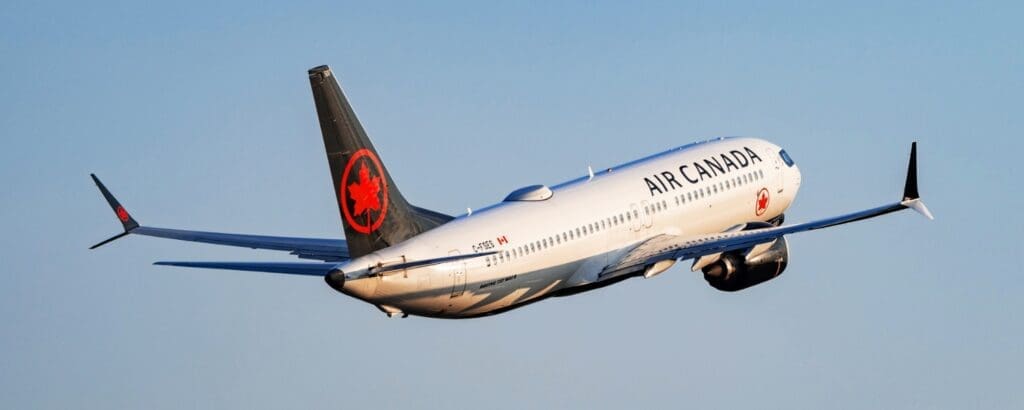
This is the core operation and the most premium, consistent version of the brand.
You will find mainline aircraft flying long haul internationally and on major domestic and U.S. routes.
Wide body fleet (long haul)
- Boeing 777-300ER
- Boeing 777-200LR
- Airbus A330-300
- Boeing 787-9
- Boeing 787-8
These aircraft mainly operate routes to Europe, Asia, South America, and other long haul markets, although they get flown on select domestic routes. Expect Signature Class with lie flat seats, Premium Economy on many aircraft, full meal service, and seatback entertainment throughout the cabin.
Narrow body fleet (North America)
- Airbus A321
- Boeing 737 MAX 8
- Airbus A220-300
- Airbus A320
These handle most domestic and transborder flying. Cabin layouts are generally more spacious than Rouge equivalents, and many aircraft offer seatback entertainment or strong personal device streaming.
If comfort, legroom, and a more traditional full service feel matter to you, this is the version of Air Canada that delivers it most consistently.
Air Canada Rouge
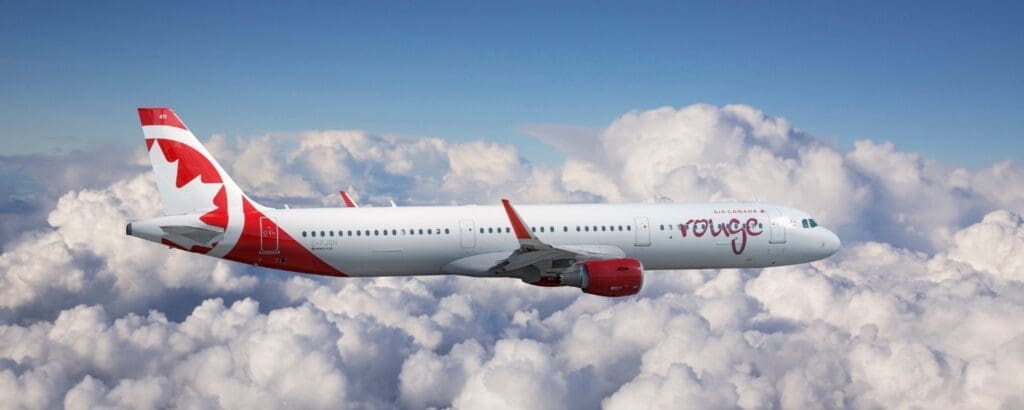
Rouge is the leisure focused arm of the airline.
You will typically see it on sun routes to the Caribbean and Mexico, select European destinations during peak seasons, and some domestic and U.S. routes.
Rouge fleet
- Airbus A321
- Airbus A320
- Airbus A319
- Boeing 737 MAX 8
Here is what you really need to know about Rouge.
The biggest difference: tighter legroom
Rouge aircraft are configured with more seats than comparable mainline aircraft. That means reduced seat pitch in economy.
For example, on Rouge’s Airbus A320-200, the seat pitch is 29″, while on an Air Canada mainline flight on the same plane, the seat pitch is either 30″ or 32″, depending on the layout of the plane.
If you are tall or particularly sensitive to personal space, you will notice it. On longer flights, especially transatlantic ones, that tighter legroom can feel significant.
Entertainment and Wi-Fi
Rouge aircraft do not have seatback entertainment screens.
Instead, there is an onboard server that you connect to with your phone, tablet, or laptop. You stream movies and shows directly to your device.
Wi-Fi is available for purchase. Food and drink offerings are very similar to mainline Air Canada.
Cabin feel
Because of the denser layout, the cabin can feel more compact and overhead bin space is more limited.
Rouge is not a bad product. It is just a higher density, leisure focused one. For a four or five hour flight to a beach destination, many travellers are perfectly happy with it. For longer flights though, you may want to consider a flight on a plane within Air Canada’s mainline operations, as you’ll likely get a superior product and experience.
Air Canada Express

Express is the regional arm of the network. Flights are operated by partner carriers such as Jazz and PAL Airlines on behalf of Air Canada.
These aircraft connect smaller Canadian cities to major hubs like Toronto, Montreal, Vancouver, and Calgary.
Express fleet
- Mitsubishi CRJ900
- Embraer E175
- De Havilland Dash 8-400
These are smaller regional jets and turboprops designed for shorter flights.
Expect:
- Smaller cabins
- Limited overhead bin space
- Short flight times
- Fewer onboard amenities compared to mainline
Express flights are typically about geography, not choice. They are the bridge between regional communities and the larger Air Canada network.
Final Thoughts

All three operate under the same Air Canada umbrella.
The real differences come down to:
- Aircraft size
- Cabin density
- Legroom
- Entertainment setup
If comfort is a top priority for you, especially on longer flights, mainline Air Canada will generally offer the most space and the most complete onboard experience.
If your flight is operated by Rouge, just be aware of the tighter legroom and bring a fully charged device for entertainment.
And if you are flying Express, know that it is designed to get you efficiently from smaller markets into the broader network.
Happy flying!


Follow me on Instagram and Tiktok for travel tips hacks that’ll make your adventures unforgettable!
@thecanadianjetsetter on INSTAGRAM →
@thecanadianjetsetter on TIKTOK →
follow me ON Instagram →
FOLLOW me on tiktok →


Comments will load here
Be the first to comment