

Canada Goes Long-Haul: WestJet and Air Canada’s Newly Announced Routes
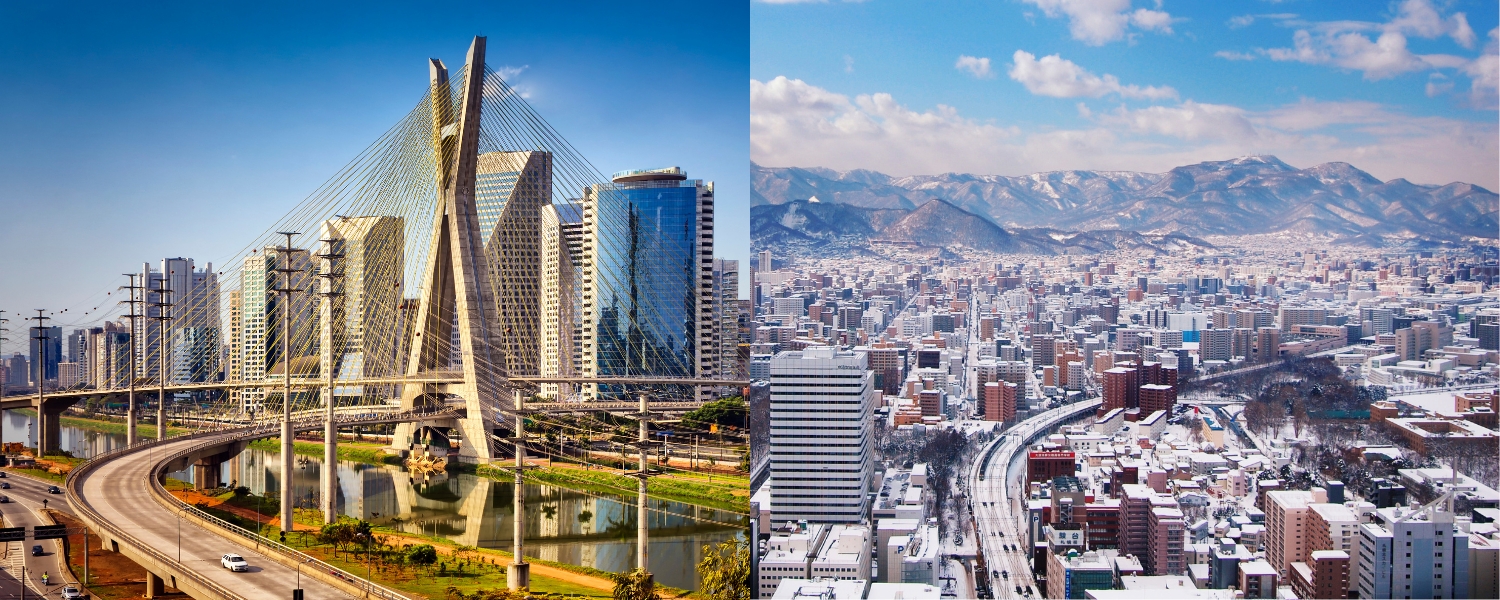
Canadian aviation just got a lot more interesting.
Within days of each other, WestJet and Air Canada announced two major long-haul additions that expand Canada’s global reach in very different ways. One heads deep into South America from Western Canada. The other doubles down on Japan with a winter seasonal link to one of the world’s most iconic snow destinations.
If you care about route strategy, aircraft choices, and what this means for your future trip planning, here’s what you need to know.
WestJet’s 100th Destination from Calgary: São Paulo, Brazil 🇧🇷

WestJet has officially announced its 100th non-stop destination from Calgary with a brand-new service to São Paulo Guarulhos International Airport.
Starting November 8, 2026, WestJet will operate three weekly flights between Calgary and São Paulo aboard its Boeing 787-9 Dreamliner.
Schedule (subject to government approval):
Calgary to São Paulo
3x weekly
22:45 departure, 15:35 arrival
São Paulo to Calgary
3x weekly
19:40 departure, 05:15 arrival
This is not just another long-haul route. It is the first non-stop connection between Western Canada and South America.
Why This Is a Big Deal for Calgary

Calgary has quietly transformed into a serious long-haul hub for WestJet. From its early days as a low-cost carrier flying mostly domestic routes, WestJet now operates intercontinental service to Europe and Asia. Adding Brazil pushes its network further south than ever before.
São Paulo is more than just a destination. It is LATAM Airlines’ largest hub (WestJet’s Codeshare Partner), which means strong onward connectivity across the continent. Pending approvals and partnership coordination, travellers from Western Canada could gain streamlined access to:
- Lima
- Santiago
- Buenos Aires
- Rio de Janeiro
- Montevideo
- And over 30 additional destinations across South America
For Alberta-based travellers, this removes the need to route through Toronto, Montreal, or a US gateway. That is a meaningful shift in network geography.
The Aircraft: 787-9 Dreamliner
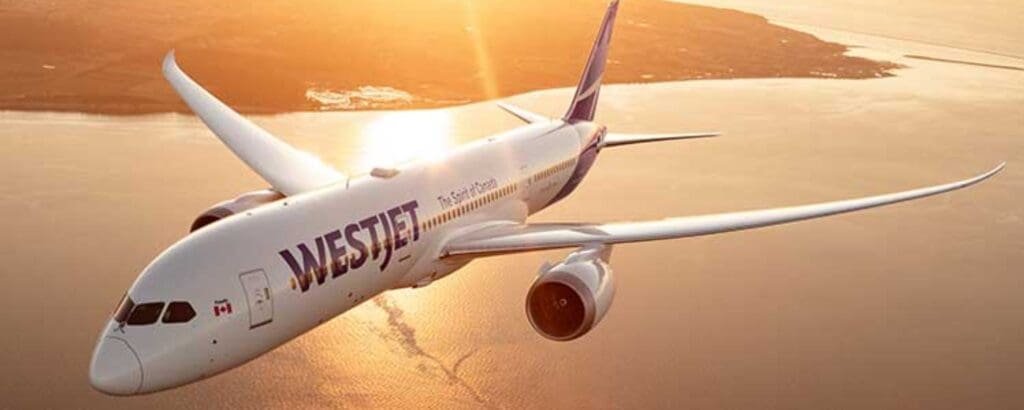
WestJet is deploying its 787-9 Dreamliner on the route, which makes sense given the distance of this route.
The Dreamliner brings:
- Lie-flat Business cabin
- Premium Economy
- Economy
- Strong cargo capability for belly freight
From a strategy perspective, São Paulo is not just about leisure travellers escaping winter. It is also about business traffic and cargo flows between Western Canada and Brazil. Calgary’s positioning as an energy and corporate hub aligns well with São Paulo’s role as South America’s economic centre.
This is WestJet further solidifying Calgary as its global long-haul base.
Air Canada Launches Vancouver to Sapporo 🇯🇵

Just two days later, Air Canada unveiled a completely different type of expansion: winter seasonal service from Vancouver to Sapporo, Japan.
Starting December 17, 2026, Air Canada will operate three weekly flights between Vancouver and Sapporo’s Chitose Airport through March 25, 2027.
Schedule:
Vancouver to Sapporo
3x weekly
13:25 departure, 15:35 arrival next day
Sapporo to Vancouver
3x weekly
19:55 departure, 11:10 arrival
This will be the only non-stop service linking Sapporo with North America.
Why Sapporo Matters

Sapporo is located in Japan’s northern Hokkaido prefecture and is globally famous for:
- The Sapporo Snow Festival
- Onsen hot springs
- Ramen and local beer culture
From a route strategy perspective, this reinforces Vancouver’s position as Air Canada’s Pacific hub. YVR is already a major trans-Pacific gateway, and this move strengthens Air Canada’s position as a North American carrier with strong non-stop Japanese destinations, already includes Tokyo Narita year-round and Osaka seasonally.
Adding Sapporo expands its Japan footprint beyond the traditional business-heavy gateways and into high-demand leisure territory.
Faster Access, Stronger Connectivity

Air Canada notes that Vancouver’s geographic positioning allows for the fastest routing between North America and Sapporo, shaving more than two hours off travel time compared to many one-stop options.
For travellers in Hokkaido, this becomes the only non-stop option to North America, with onward connectivity via Vancouver to more than 45 destinations across Canada, the United States, and Mexico.
Like WestJet’s São Paulo move, this is about more than just one city pair. It is about strengthening a hub.
Aircraft and Onboard Experience
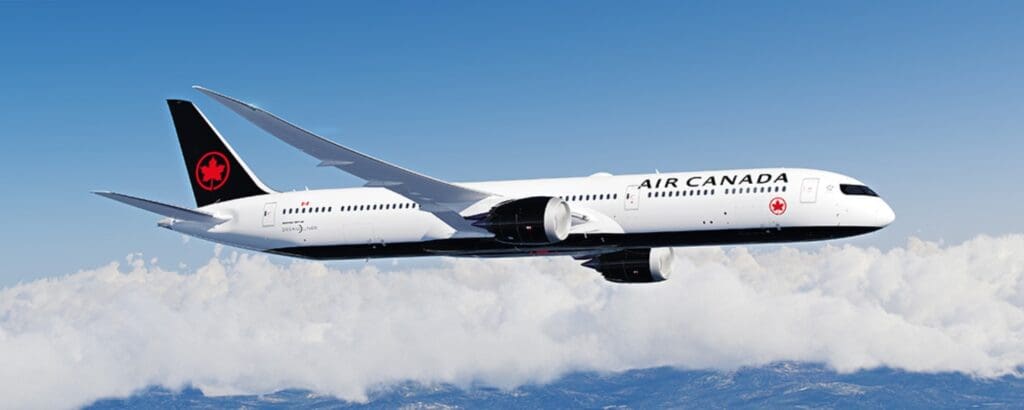
The route will be operated by Air Canada’s Boeing 787 Dreamliner, featuring:
- Signature Class
- Premium Economy
- Economy
Ski equipment is included within standard baggage allowances on international fares, except Basic Economy. That is a meaningful perk for a route built around winter sports demand.
For Aeroplan members, this opens up new redemption opportunities to one of the world’s most sought-after ski regions.
The Bigger Picture: Two Airlines, Two Strategies

What makes these announcements especially interesting is how clearly they reflect each airline’s broader strategy.
WestJet is building Calgary as a global connector, expanding south into Latin America while leveraging partnerships like LATAM to extend reach across an entire continent.
Air Canada is reinforcing Vancouver as a trans-Pacific powerhouse, deepening its Japan network and focusing on premium leisure demand alongside traditional business routes.
Both moves:
- Expand Canada’s non-stop global connectivity
- Strengthen hub strategy in Western Canada
- Increase long-haul 787 utilization
- Offer new opportunities for points redemptions and premium travel
For Canadian travellers, especially those based in Calgary and Vancouver, this means fewer connections, more direct long-haul options, and stronger global access without defaulting to US gateways.
Final Thoughts

Calgary to São Paulo and Vancouver to Sapporo might not look similar on the surface, but they signal the same thing: Canadian carriers are thinking big.
Western Canada is no longer just a spoke in the system. It is becoming a launch point.
If these routes perform well, do not be surprised to see even more long-haul expansion into South America from YYC with WestJet, and from YVR to Japan with Air Canada in the coming years.
Which of these two routes would you book first?


Follow me on Instagram and Tiktok for travel tips hacks that’ll make your adventures unforgettable!
@thecanadianjetsetter on INSTAGRAM →
@thecanadianjetsetter on TIKTOK →
follow me ON Instagram →
FOLLOW me on tiktok →


Comments will load here
Be the first to comment