

Vancouver to Tokyo: Comparing Air Canada, ANA, JAL, and ZIPAIR

Flying nonstop from Vancouver to Tokyo is one of the most exciting long haul routes from Canada. In roughly ten hours, you can leave the Pacific Northwest and arrive in one of the most fascinating cities in the world. What makes this route especially interesting is the variety of airlines serving it, each offering a very different experience in the air.
Whether you value loyalty points, onboard comfort, Japanese hospitality, or the lowest possible fare, the airline you choose can completely shape your journey. Here is how Air Canada, ANA, JAL, and ZIPAIR Tokyo compare on the Vancouver to Tokyo route.
Air Canada: The Familiar Canadian Choice

For many Canadian travellers, Air Canada feels like the default option, and for good reason. As Canada’s flag carrier and a Star Alliance member, it offers a reliable, full service experience that integrates well with Aeroplan and the broader Air Canada network.
Air Canada typically operates one nonstop flight per day between Vancouver and Tokyo Narita. The aircraft used is the Boeing 777-300ER, configured with business class, premium economy, and economy cabins.
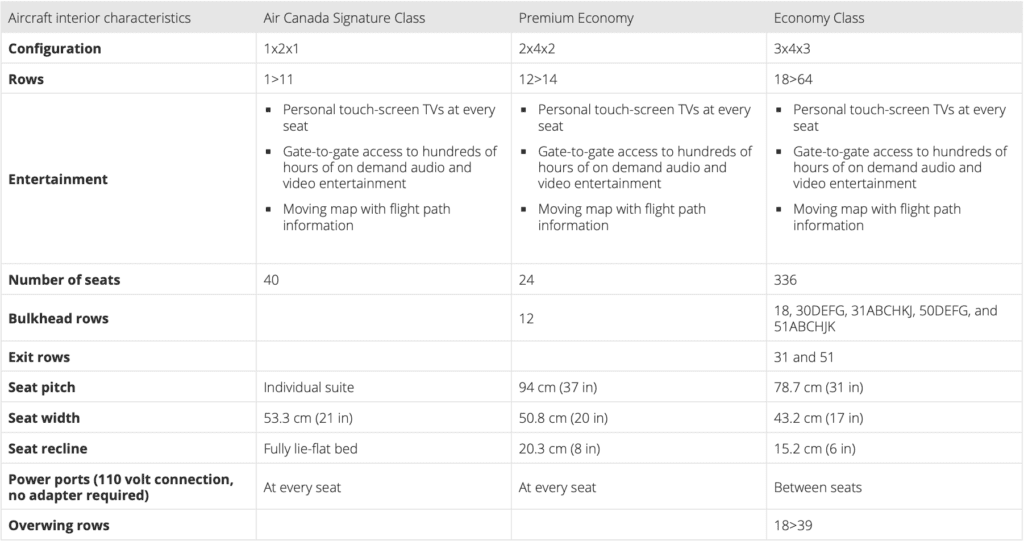
In Signature Class, passengers get lie flat seats, direct aisle access, upgraded dining with Canadian and international touches, and access to Maple Leaf Lounges at Vancouver International Airport.
Premium economy is a solid middle ground, offering noticeably more legroom than standard economy (37″) , wider seats (20″), deeper recline (8″), and enhanced meal service.
Economy class is what most travellers will experience, and it is a dependable long haul product. Meals, snacks, and non alcoholic beverages are included, with personal entertainment screens and standard long haul seat pitch (31″). While Air Canada does not always wow in economy, it delivers a consistent and comfortable experience that many travellers appreciate.
Air Canada’s biggest strengths on this route are familiarity, Aeroplan earning and redemption opportunities, and the ability to connect easily onward within Canada.
ANA: Quietly Excellent Japanese Hospitality

All Nippon Airways, commonly known as ANA, is often praised by frequent flyers for its consistency and attention to detail. While it may not market itself loudly, the experience onboard tends to speak for itself.
ANA operates daily nonstop flights between Vancouver and Tokyo Haneda. This is an important distinction, as Haneda Airport is significantly closer to central Tokyo than Narita, making arrival day smoother and faster for many travellers.
Flights are typically operated by Boeing 787 aircraft, which are well suited for long haul travel thanks to quieter cabins and improved cabin pressure. ANA offers business class, premium economy, and economy cabins on this route.
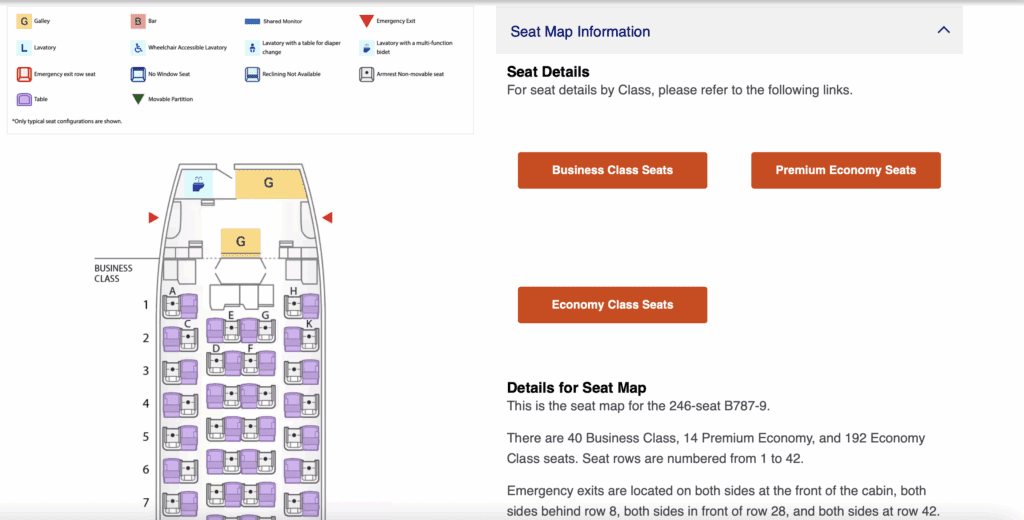
Business class features lie flat seats paired with a refined service style that feels calm, intentional, and quietly premium. The cabin is arranged in a 1-2-1 staggered configuration, which works beautifully for solo travellers on the sides and couples seated in the centre, creating a shared space that feels surprisingly intimate for a long haul flight.
Meal service leans heavily into Japanese cuisine, complemented by Western options, and is delivered in a thoughtful, unhurried way that makes the experience feel genuinely elevated.
Premium economy is widely regarded as one of the better versions of the product globally, offering generous legroom (38″). For the seat width though, it delivers a slightly narrower seat than Air Canada, at 19.3″.
Economy class is extremely comfortable and well organized, with attentive service, solid meal quality, and an overall sense of polish that makes the long flight feel more manageable. Something to note is that Japanese airlines have incredibly roomy economy seats for international flights, and ANA’s economy class has the highest seat pitch out of the four airlines that fly this route, at a spectacular 34″. If you’re a tall person, this is something to think about when choosing which airline to fly.
ANA is an excellent choice if you value smooth service, punctuality, and a quieter, more refined onboard environment.
JAL: A Standout Economy Experience

Japan Airlines, or JAL, has a long standing reputation for exceptional service, with particular praise often directed at its economy cabin. On the Vancouver to Tokyo route, JAL delivers a well rounded experience that blends comfort, consistency, and traditional Japanese hospitality.
JAL typically operates one nonstop flight per day between Vancouver and Tokyo Narita, most often using a Boeing 787 aircraft configured with business class and economy cabins. Note that on the Boeing 787, there is no Premium Economy class.
In business class, JAL offers lie flat seats in a 2-2-2 configuration. While this layout places centre seats side by side, the cabin is cleverly designed so that every passenger still has direct aisle access. The service is polished yet understated, with a strong emphasis on dining. Meals are thoughtfully presented, featuring Japanese cuisine alongside Western options, creating a calm and refined atmosphere that makes a long transpacific flight feel elevated.
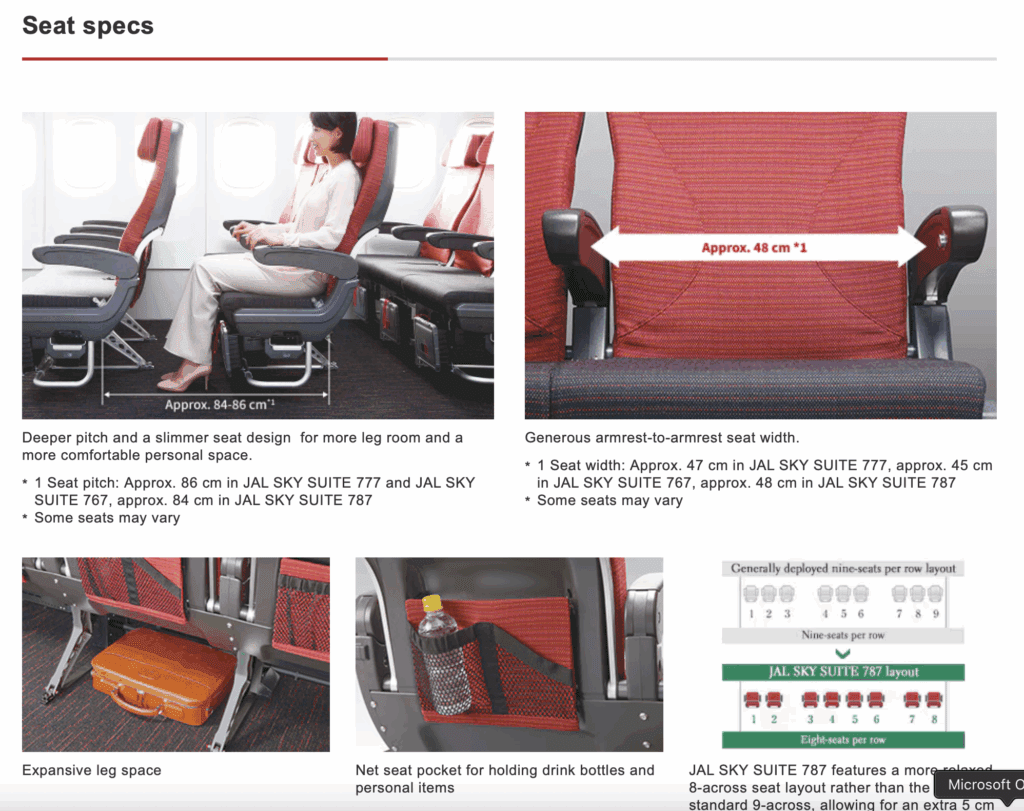
JAL is the only airline in the world that has 8-seats across in their Boeing 787 Economy class, with a 2-4-2 configuration. While this was Boeing’s original layout intention, airlines realized they could fit in an extra seat per row with a 3-3-3 seating configuration, so what’s what they do…except for JAL!
As a result of this, economy class seats are wider (18.8″) than those found on many North American carriers, a difference that becomes especially noticeable over ten hours in the air. Similarly to ANA, seat pitch is roomier than most North American carriers at 33″ (although ANA is 34″, one inch more). Meal service is also a highlight here, with Japanese and Western choices that feel carefully prepared rather than mass produced.
For travellers planning to fly economy but wanting an almost Premium Economy-like onboard experience, JAL is often considered one of the strongest options across the Pacific.
ZIPAIR Tokyo: The Disruptor

ZIPAIR Tokyo brings a very different philosophy to the Vancouver to Tokyo market. As a low cost carrier backed by Japan Airlines, ZIPAIR focuses on offering lower base fares while allowing passengers to customize their experience through paid add ons. We’ve seen round-trip fares from Vancouver to Tokyo for as low as in the $500s CAD in Economy class and under $2,500 CAD for their ZIP Full-Flat seat, which are both incredible price points for crossing the Pacific Ocean.
ZIPAIR operates several flights per week between Vancouver and Tokyo Narita, rather than daily year round service. Flights are operated using Boeing 787 Dreamliners, the same long haul aircraft type used by many full service carriers.
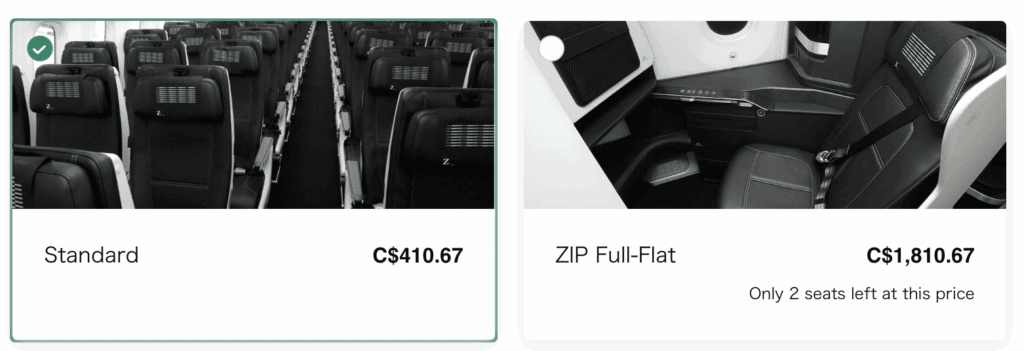
The cabin layout is simpler than traditional airlines. Standard seating is more basic, and nearly everything beyond the seat itself costs extra. This includes meals, checked baggage, seat selection, and onboard amenities. For example, there is no seat-back entertainment, so make sure you bring your own entertainment onboard. In terms of seat pitch, it’s aligned with most international carriers at 31″, which is not exemplary but at its price point, is quite acceptable.
What makes ZIPAIR especially interesting is its flat bed seating option at the front of the aircraft. These seats offer a business class style sleeping surface but without the traditional service inclusions. For travellers who value sleep over frills, this can be an incredible value, sometimes costing less than premium economy on other airlines.
ZIPAIR is best suited to travellers who are price focused, comfortable with a no frills experience, and willing to plan ahead to manage add on costs.
Which Airline Is Right for You?

Choosing between these four airlines comes down to priorities.
Air Canada is ideal for travellers who want to earn Aeroplan points, lounge access, and a familiar Canadian airline experience. ANA excels in service consistency and convenience thanks to Haneda arrivals. JAL stands out for its economy class comfort, making long haul travel feel more humane. ZIPAIR offers unbeatable pricing flexibility for travellers willing to trade inclusions for lower fares.
No matter which airline you choose, flying nonstop from Vancouver to Tokyo is one of the best ways to cross the Pacific. The key is matching the airline to your travel style, your budget, and how you want those ten hours in the air to feel.


Follow me on Instagram and Tiktok for travel tips hacks that’ll make your adventures unforgettable!
@thecanadianjetsetter on INSTAGRAM →
@thecanadianjetsetter on TIKTOK →
follow me ON Instagram →
FOLLOW me on tiktok →


Comments will load here
Be the first to comment